A humanitarian campaign against gender-based violence
It's my fault.It's not my fault.
Every day, survivors of violence are asked what they wore, why they stayed, why they didn't speak sooner. We exist to answer once and for all: it was never their fault — and no one should carry it alone.
1 in 3
women worldwide experience physical or sexual violence in their lifetime (WHO)
< 40%
of women who experience violence ever seek help of any kind (UN Women)
9 in 10
children who experience sexual abuse know the person who harmed them
Why we exist
Shame is heavy. We help set it down.
"It's my fault, it's not my fault" began as a sentence survivors whisper to themselves — half-believed, never finished. Our work is to finish it for them, in public, until the world stops asking victims to carry guilt that was never theirs.
We say it out loud
Blame belongs to one person only: the one who caused harm. Our campaigns, classrooms and communities repeat it until it sinks in.
We stand beside survivors
From the first call for help to the long road after, we fund counselling, shelters and hotlines so no one faces it alone.
We protect the next generation
We teach children and young people about consent, safety and their right to be heard — before harm ever reaches them.
Nicole's story
I was the researcher who wasn't believed.
I am a humanitarian researcher and an actress. While researching gender-based violence, I sat across from a survivor and dissociated — her story became my body's story. When I tried to speak about what was happening, no one believed me.
So I did what I know: I turned the research into a script. Not to entertain — to show, in front of people's eyes, what disbelief does. When a woman in desperate need asks for help and is not believed, her life is put in danger.
In the women I researched, I kept seeing the same thing I felt myself: the fear of asking for help. This campaign exists so that the next woman who reaches out is believed the first time.
Nicole MeyerResearcher, actress & advocate for survivors of gender-based violence
"When a woman in desperate need asks for help and no one believes her, her life is put in danger. Believe her the first time."
The film
Case study 001 — what a victim goes through
This film shows, from the inside, what a victim of gender-based violence goes through — the fear of asking for help, and what happens when she is not believed. Watch it, and believe her the first time.
A gentle note before you press play: this film discusses gender-based violence and may be difficult to watch. Take care of yourself, and use the Quick exit button at the top of the page if you need to leave fast. Watch on YouTube
The numbers
Four countries. One pattern.
Gender-based violence is not a single country's crisis. These are the most recent national figures Nicole follows in her advocacy work.
France
- 272,400victims of intimate-partner violence recorded in 2024 — 84% were women (64% physical, 31% verbal/psychological, 5% sexual)
- 122,600victims of sexual violence recorded in 2024 — 58% of them minors
Source: French Ministry of Interior — police & gendarmerie records
United States
- 43.5 millionwomen — more than 1 in 3 — experienced contact sexual violence, physical violence and/or stalking by an intimate partner in their lifetime
- 19.7%of women experienced contact sexual violence by an intimate partner
- 22.5% · 12.2%experienced physical violence · stalking by an intimate partner
Source: US Centers for Disease Control and Prevention — lifetime prevalence survey
UK — England & Wales
- 2.2 millionwomen aged 16+ experienced domestic abuse in the year to March 2025 — 9.1% of women
- 3.8 millionpeople aged 16+ experienced domestic abuse — 7.8% of the population
Source: UK Office for National Statistics — survey estimate
South Africa
- 7.3 millionwomen aged 18+ experienced physical violence in their lifetime — about one in three
- 2.15 million+women experienced sexual violence in their lifetime
- 9 per 100,000femicide rate — roughly five times the global average
Source: First South African National GBV Prevalence Study (Nov 2024) — South African Government / HSRC
Before comparing these numbers, read this
These figures come from different years, age groups, definitions and methods, so they are not a country ranking. France's 272,400 counts victims recorded by police — the UK's 2.2 million is a survey estimate designed to include abuse that never reaches police, and the US and South Africa figures are lifetime survey findings. France reports that only about 1 in 6 victims of intimate-partner violence ever reported to security services — which means the true scale, in every one of these countries, is far larger than any recorded number.
Talking points
Why some women can't say no
It is one of the saddest questions people ask: "why didn't she just say no? why did she stay?" The honest answer is that a no needs safety, and safety is exactly what abuse takes away first.
Saying no can cost her life
Refusal is often the moment danger escalates. Many women have learned, sometimes the hard way, that a no is answered with punishment.
Control came first
Abuse is rarely only physical. Isolation from family, threats, monitoring, money taken away — by the time a no is needed, the space to say it has been removed.
Her body freezes
When terror takes over, the body's survival responses are to freeze or to appease. Going along is not the same as agreeing — and it is never consent.
There is nowhere to go
Rent, savings, children, a visa tied to her partner. Dependence turns a door into a wall, even when she knows she should walk through it.
She believes it is her fault
The sentence 'it's my fault' silences the no before it is ever spoken. Shame does the abuser's work for him.
No one believed her the last time
When speaking up once was met with disbelief or blame, silence becomes protection. This is the fear Nicole saw in the women she researched — and felt herself.
This is why "just say no" is not the answer. Belief is. A safe way out is. Someone who listens the first time is.
Get help
Reaching out is brave. Here is where to start.
Talk to someone, 24/7
- National Domestic Violence Hotline — 1-800-799-7233
- Crisis Text Line — text HOME to 741741
Help for children
- Childhelp National Child Abuse Hotline — 1-800-422-4453
- Free, confidential, any time of day
In immediate danger
- Call your local emergency number right away
- If you can't speak safely, dial and leave the line open
Conversations are confidential. Clearing your browser history does not remove tracking software — use the Quick exit button at the top of this page if you need to leave fast.
Stories
In their words
Shared by survivors who chose to be heard. Names are withheld, words are theirs.
"For eleven years I opened my mouth and apologized for existing. The day a counselor said "it wasn't your fault" out loud, something in me finally stood up straight."
"My daughter asked me if it happened because she was bad. She was six. That is the moment I understood why this sentence has to be everywhere."
"I used to finish the sentence for people: it's my fault… it's not my fault. Now I only ever say the second half."
A magazine I started
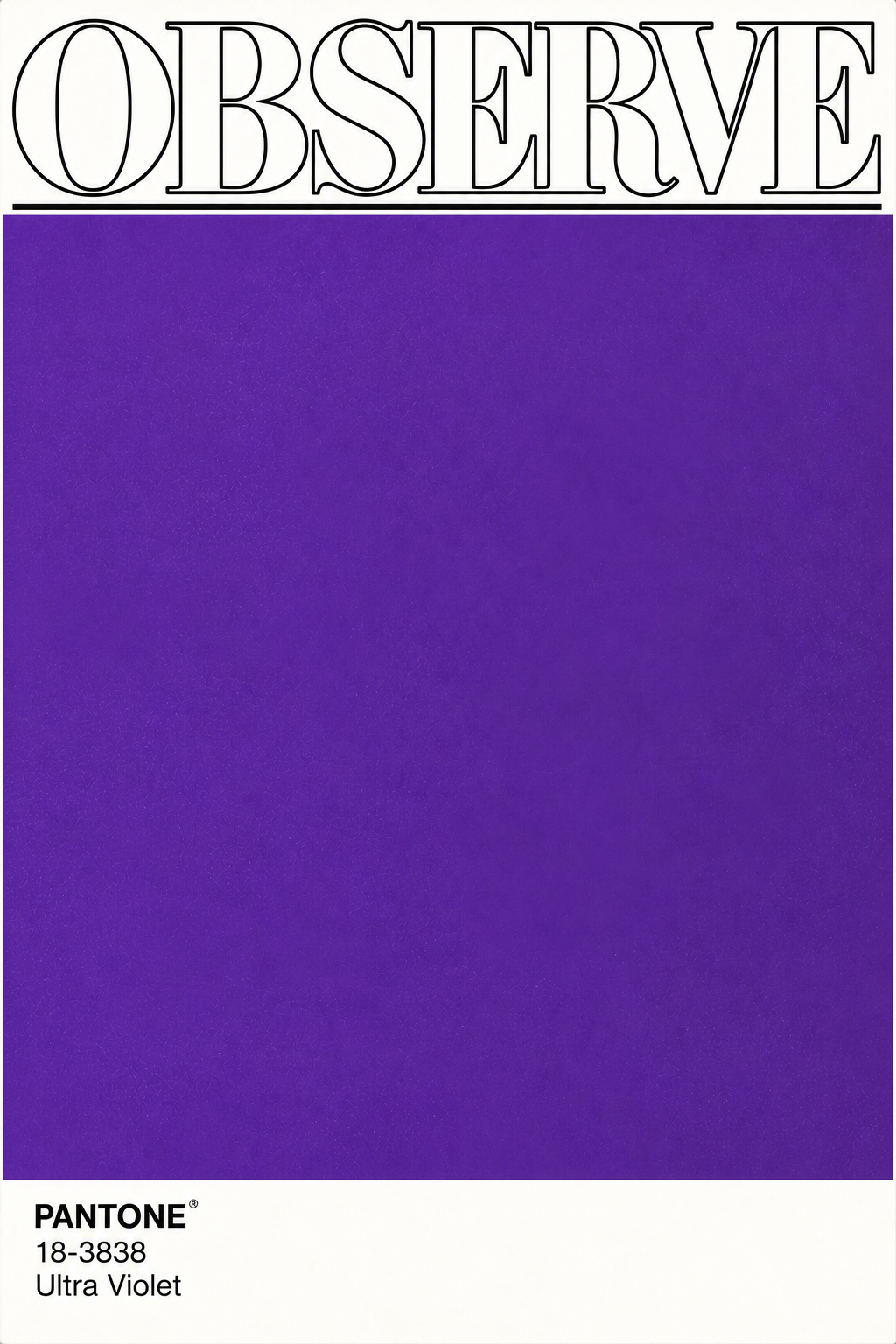
OBSERVEIssue 01
OBSERVE was born from the same question this campaign asks: what happens when we truly look? Too many people are asked to look away from a woman in danger — to doubt her, to stay out of it, to decide she must be mistaken.
This first issue is where the research, the script and the stories meet on the page. It asks its readers to do the one thing disbelief never allows: observe, and believe what she is telling you.
Ultra Violet — the colour of standing with survivors.
Get involved
Three ways to help finish the sentence
Donate
Your gift funds hotlines, counselling sessions and safe beds. Even a small amount keeps a line open tonight.
Give once or monthlyVolunteer
Answer calls, run school workshops, translate materials. If you have time and heart, we have a place for you.
Join the teamSpeak up
Share the sentence. Post it, wear it, say it in your classroom, your workplace, your home. Silence is what blame hides behind.
Spread the message